
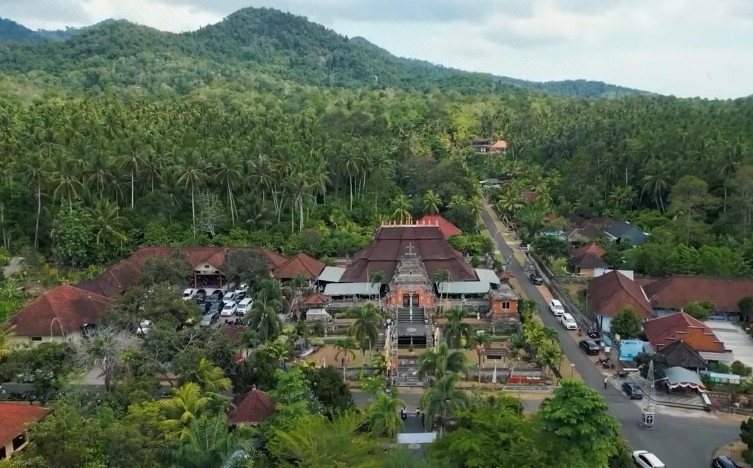
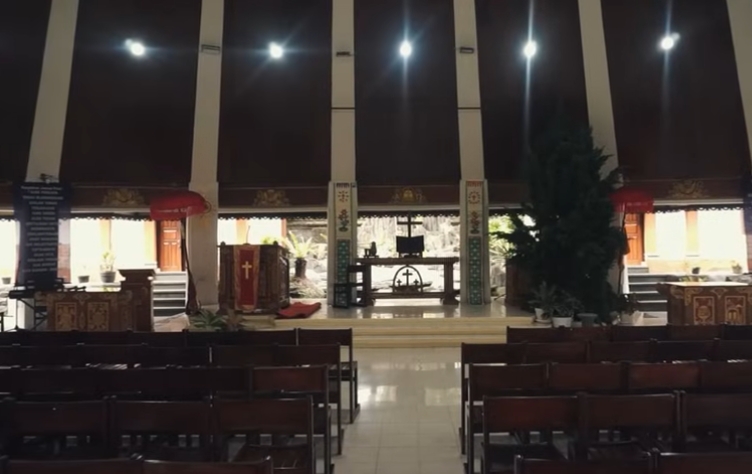
🕊️ Pniel Blimbingsari Church: Where Balinese Art Meets Christian Faith
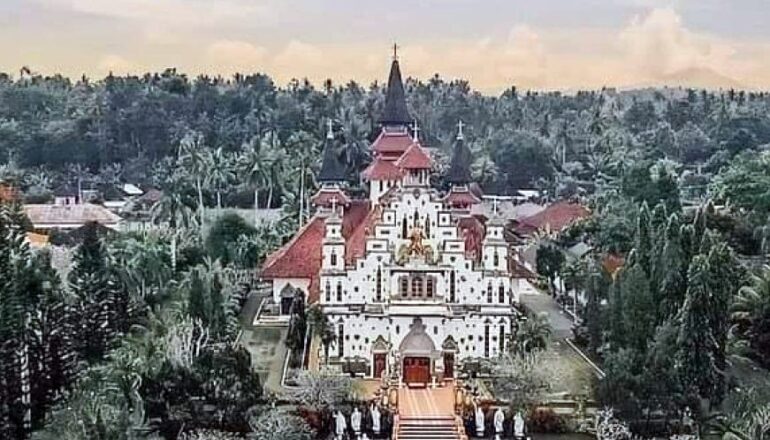
Located in the serene Christian village of Blimbingsari in the Jembrana Regency of West Bali, the Gereja Kristen Protestan di Bali (GKPB) Jemaat Pniel is globally recognized as one of the most distinctive churches in the world. It serves as a remarkable testament to the spirit of inculturation, demonstrating the seamless blending of the Christian faith with deep-rooted Balinese cultural traditions.
A History Forged in Exile
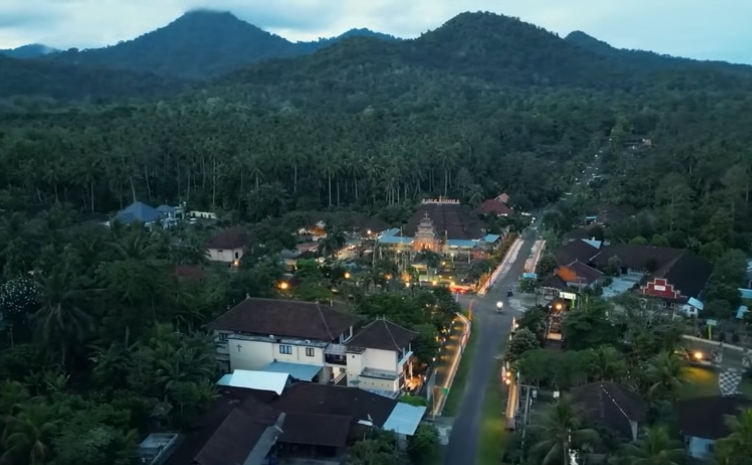
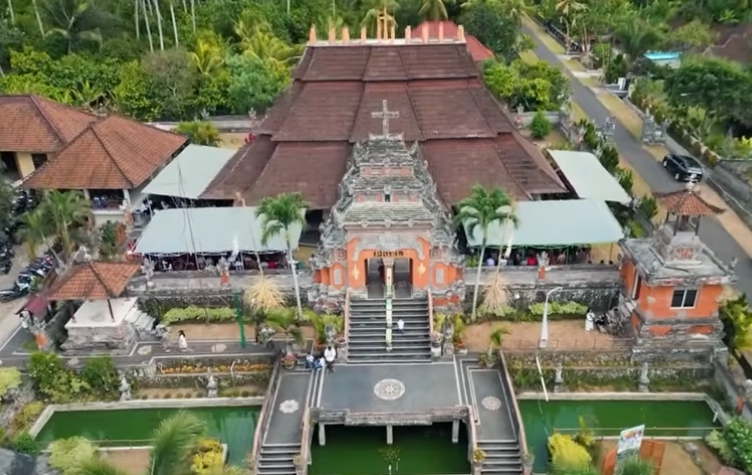
The story of the Pniel Church begins not with a grand construction, but with the challenging establishment of the Blimbingsari community itself.
- The Founding: The village was established in 1939 when a group of Balinese converts to Protestant Christianity, facing social and religious conflict in their original villages (mainly around Denpasar), were exiled by the Dutch colonial government and the local ruling elite. They were settled in a remote, untamed jungle area, which they named Blimbingsari (after the starfruit trees, blimbing, that did not yet bear fruit, sari).
- The Original Church: The first church building was constructed in a more common European architectural style. However, after an earthquake severely damaged the structure in 1971, the community made the profound decision to rebuild it using the authentic and revered Balinese architectural style (arsitektur tradisional Bali).
- A Symbol of Identity: This reconstruction marked the church, and the village, as a powerful symbol of identity. It asserts that one can be both fully Christian and fully Balinese, leading to its affectionate local nickname: the “Pura Gereja” (Temple Church).
Architectural Inculturation: A Balinese Pura Form
The current design of the Pniel Church deliberately adopts the structure and philosophical principles of a traditional Balinese Hindu temple (pura).
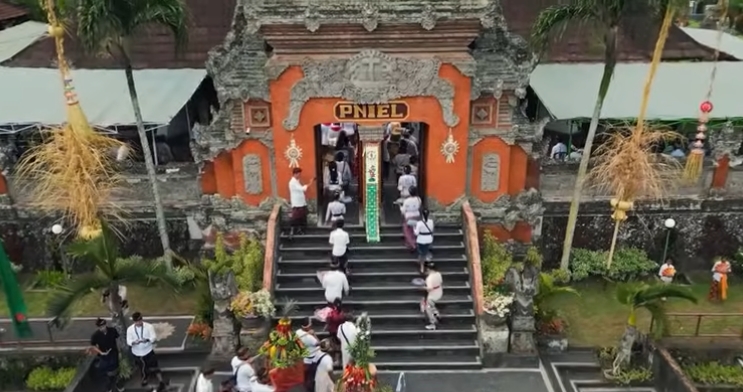
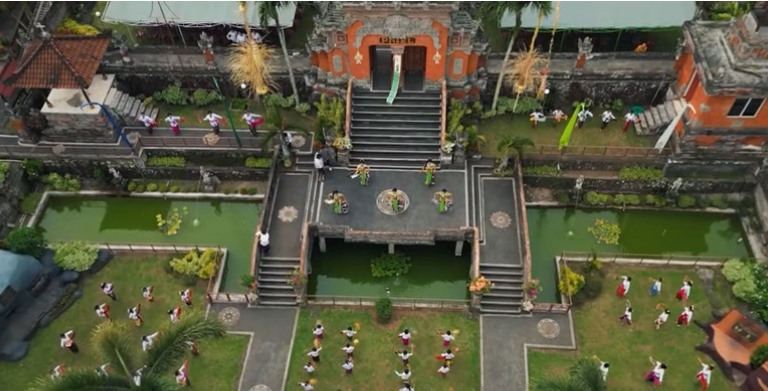
- Tri Mandala Zoning: Like a pura, the church grounds are divided into three symbolic zones or courtyards, known as Tri Mandala:
- Nista Mandala (Outer Courtyard): Features functional buildings like the pastor’s house and office.
- Madya Mandala (Middle Courtyard): Used for gathering and is defined by the Candi Bentar (split gate), which separates the sacred area from the outside world.
- Utama Mandala (Main Courtyard): The holiest area housing the main church building itself.
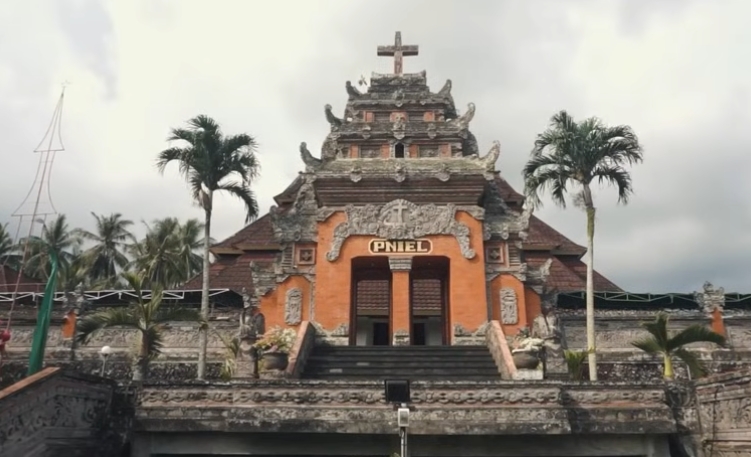
- Balinese Elements: The church building features walls made of padas (soft volcanic stone) and red brick, adorned with intricate Balinese carvings and reliefs. The main entrance is often a majestic Candi Kurung (covered gate).
- The Kulkul: Instead of a traditional church bell, the Pniel Church uses a Bale Kulkul, a small pavilion housing a wooden slit drum (kentongan or kulkul), which is customarily used in Balinese villages to summon the community or signal events.
The Living Culture of Worship
The blending of faiths extends beyond the architecture and into the worship and daily life of the community.
- Attire: During important services, the congregation often wears traditional Balinese ceremonial dress (kebaya for women, kamben and udeng for men), reflecting the reverence shown in Hindu temple ceremonies.
- Music: Liturgical music is frequently accompanied by Balinese Gamelan instruments, adapting the island’s classical musical forms to Christian hymns.
- Village Layout: The entire village of Blimbingsari, not just the church, is laid out according to the Balinese cosmic principles of Nyegara Gunung (Sea-Mountain) and even follows a cross-shaped pattern in its main roads.
A visit to Pniel Blimbingsari offers a truly unique cultural immersion, highlighting the deep respect and harmony that exists between religious and cultural identities in Bali.